

Background
At just 16 years old, Doug Kern suffered a devastating neck fracture during a high school football game. Immediately after his injury, he was completely paralyzed and told he would never walk again.
After six months of rehabilitation, Doug exceeded every expectation. He walked out of the hospital with a cane and gradually returned to many of the activities he loved—including golf, bowling, traveling, and raising a family.
For decades, he lived what he considered a normal life. But over time, things began to change. Doug slowly lost strength in his legs, progressing from a cane to crutches and eventually to full-time wheelchair use. After years without walking, his daughter-in-law encouraged him to seek treatment at The Physio Fix. By the time he arrived there, Doug was no longer able to walk.
The Challenge
The biggest hurdle was helping Doug's brain and body trust movement again after years without standing or walking. Like many individuals living with chronic neurological injuries, prolonged immobility had created both physical and psychological barriers to movement. Every step required rebuilding confidence alongside physical function.
The Solution
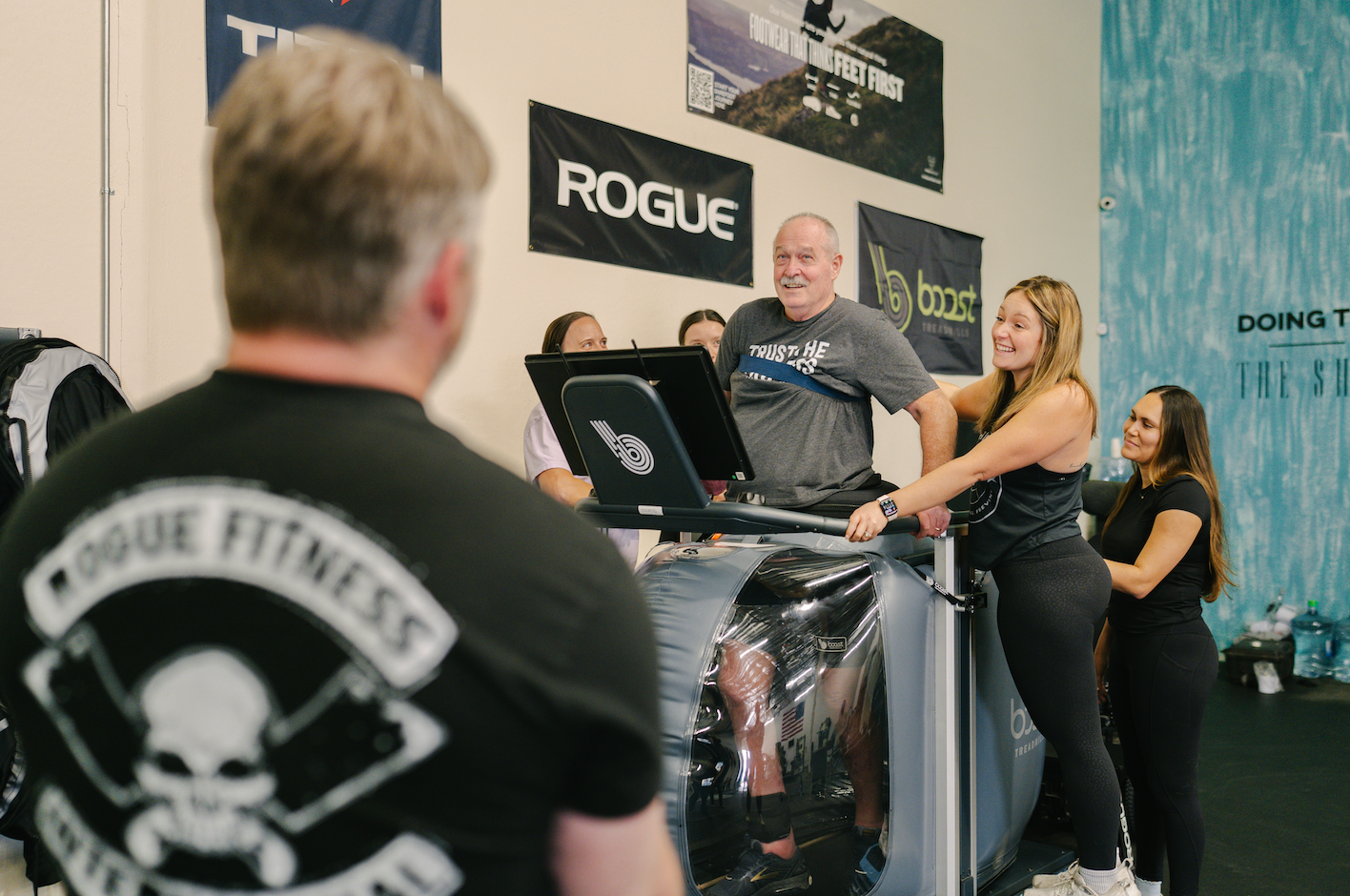
Using the Boost Treadmill, Doug was able to begin walking again in a safe, controlled environment. By unloading a percentage of his body weight, therapists could introduce normal walking mechanics without requiring his legs to support his full weight.
This allowed Doug to:
- Practice walking before he could safely do so over ground
- Reintroduce repetitive stepping patterns to reinforce neuromuscular control
- Reduce fear of falling
- Build strength while gradually increasing weight-bearing
According to his therapist, reducing Doug's body weight allowed his brain to become comfortable allowing the movement again.
The Turning Point
For Doug, the most meaningful moment was standing again. After years in a wheelchair, simply experiencing upright walking again reminded him what movement felt like.
"It probably was the first time I actually stood and walked in three years. You forget how tall you are and what it feels like to get your legs moving again."
That experience became the catalyst for everything that followed. As his therapist explained, giving patients a glimpse of what is possible often rebuilds the confidence they need to continue working toward recovery.
Progress
Doug continues working toward greater independence. One of his personal milestones is crossing the therapy gym floor, using the letters in the the "Physio Fix" embedded in the carpet to measure his progress.
"When I first started, I couldn't even stand. Now I'm up to the 'Y.'"
While he still has work ahead of him, each session brings him closer to his goal of walking further with less assistance. His therapist credits body weight support with allowing him to activate muscles that would otherwise be too difficult to train under full body weight.
Looking Forward
More than helping Doug walk again, the Boost Treadmill restored his belief that progress is still possible. His hope is to regain enough mobility to visit friends, move comfortably through their homes, and enjoy more of life's everyday moments on his feet.
"Recovery from these kinds of things still takes hope... You don't get anywhere without doing the work. Do the work."

Heidi Wing: Regaining Independence After Spinal Cord Injury