

What is microgravity treadmill training?
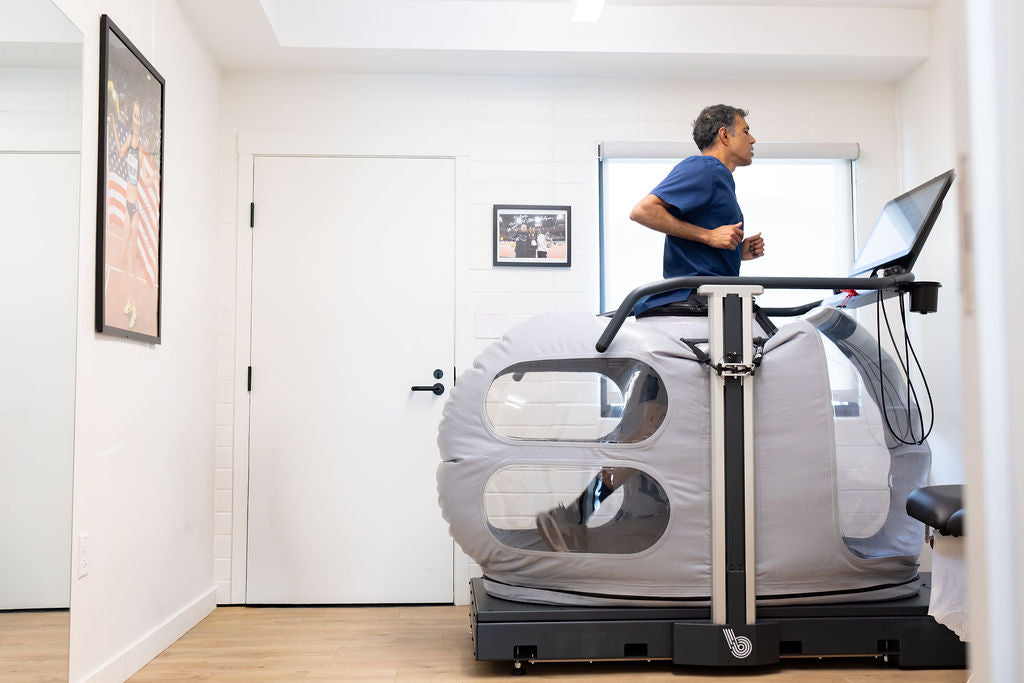
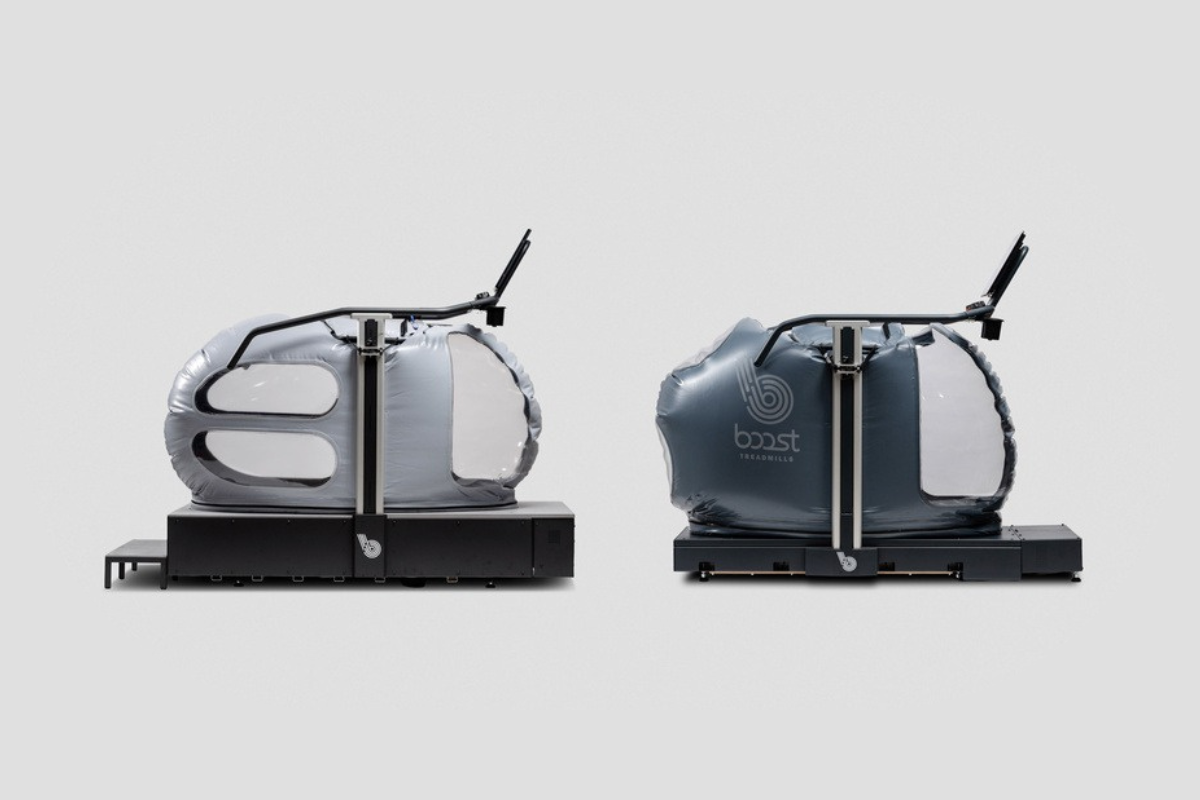
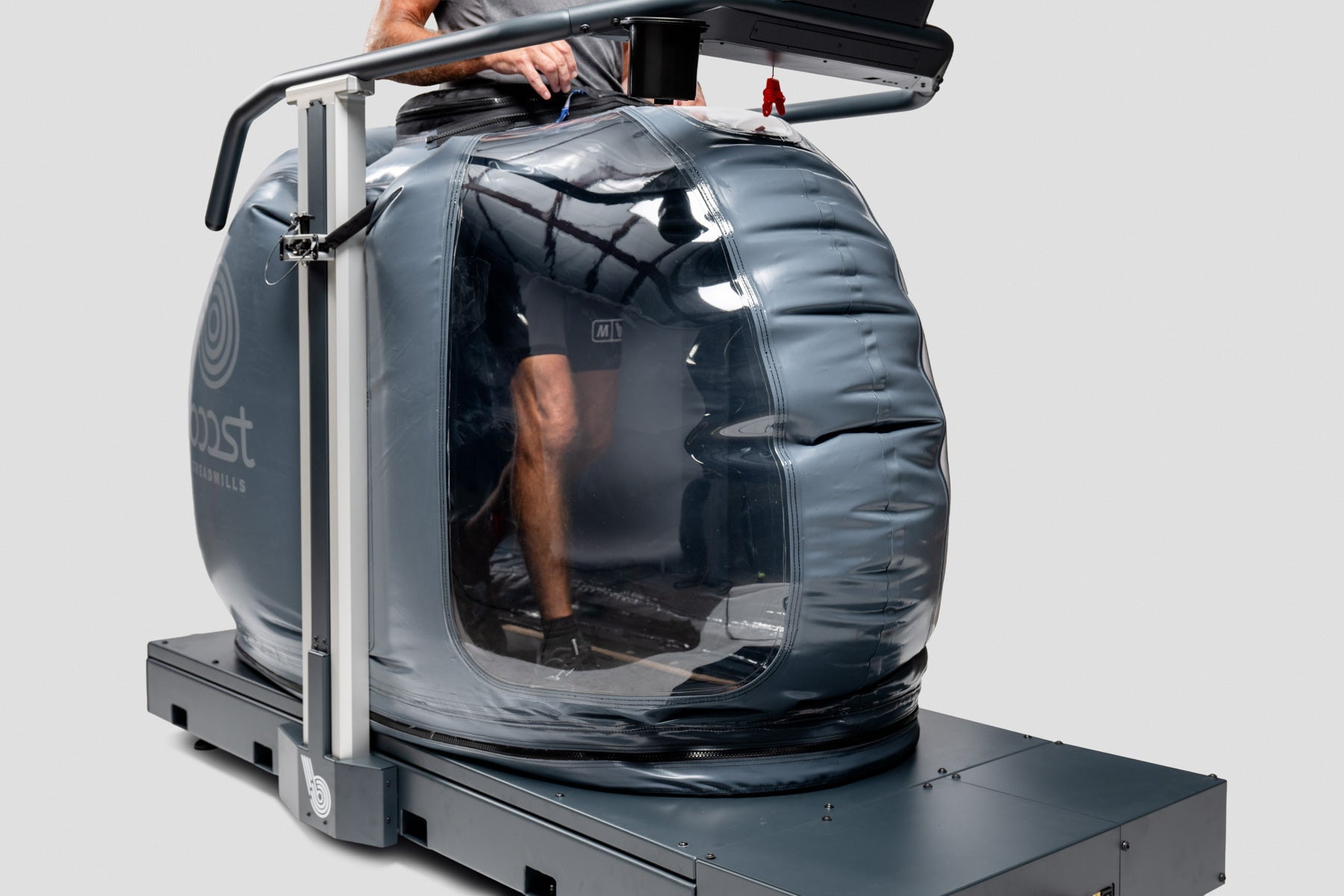
Microgravity Treadmills use air-pressure technology to partially support your body weight while walking or running. Originally developed through innovations at NASA, this technology allows users to move with less impact while maintaining natural gait and mechanics.
By reducing the load placed on the body, microgravity training creates a safer environment for movement—making it especially valuable during injury recovery, rehabilitation, or low-impact conditioning.
How does microgravity treadmill training work?
Inside the treadmill, air pressure creates a lifting force that reduces how much of your body weight your legs have to support. This allows you to move with less stress on joints and soft tissue while still maintaining proper mechanics.
-
Reduces impact on joints, bones, and muscles
-
Adjustable support levels for gradual progression
-
Allows natural gait, cadence, and posture
Rather than eliminating movement altogether, users can keep training at a level that aligns with their current ability.
Who can benefit from microgravity treadmill training?
Microgravity training serves a wide range of users, all with one common need: to reduce impact without stopping movement.
Athletes use it to enhance performance—whether through overspeed training, increasing mileage with less impact, or staying fit while recovering from injury.
Example: High school athletes at San Antonio Christian use Boost treadmills to maintain running fitness during recovery, preventing setbacks while keeping up with training.
In rehab settings, it allows patients to begin walking or running earlier in the recovery process. Older adults benefit from a more joint-friendly way to maintain cardiovascular health, while home users are drawn to its ability to make daily exercise safer and more sustainable.
It’s also especially valuable for individuals managing chronic conditions that make high-impact activity difficult.
What are the benefits for recovery?
-
Reduced joint stress – protects knees, hips, and ankles
-
Faster rehabilitation – supports consistent, safe movement
-
Maintained fitness – preserves cardiovascular conditioning
-
Progressive loading – gradually reintroduces full body weight
-
Versatility – effective for athletes, patients, and everyday home users
How is this technology inspired by NASA?
In space, the absence of gravity creates a serious challenge: without load, the body quickly begins to lose muscle and bone density. To counter this, Dr. Robert Whalen at NASA developed differential air-pressure systems that simulate the effects of gravity during exercise.
Years later, his son, Sean Whalen, adapted and reversed that concept for use on Earth. Rather than adding load, Boost Treadmills precisely reduce it, creating an environment where movement is supported without being restricted. The result is a controlled, low-impact setting that allows users to move safely while preserving strength, mechanics, and function.
Where are microgravity treadmills used?
Microgravity treadmills are used across a wide range of environments, including:
-
Athletic programs at the high school, collegiate, and professional levels
-
Performance centers and training facilities
-
Rehabilitation clinics and medical settings
-
Home gyms and personal use environments
Why choose Boost Treadmills for microgravity training?
Boost Treadmills are designed for simplicity, adaptability, and real-world use across recovery and performance settings. With adjustable bodyweight support—reducing up to 80% of bodyweight—and customizable speed, users can tailor each session to their exact needs, whether training for performance, maintaining daily movement, or recovering from injury.
Motorized height adjustment and automatic lift, paired with a 5-second auto-calibration, make it easy to get in and out and start sessions quickly without disruption.
The result is a system that supports consistent, low-impact movement across a wide range of users and training environments.
Conclusion
Microgravity treadmill training is a safe & effective solution for low-impact exercise and injury recovery. By reducing joint stress, promoting safe movement, and supporting gradual progression, Boost Treadmills help users stay active, recover faster, and train safely.
Learn more about Boost Treadmills and microgravity training here.

Who We Are & What We Believe
Supporting Mobility and Longevity: The Best Low-Impact Treadmills for Seniors