

Recovering From Injury Doesn’t Mean Stopping Movement
Recovery doesn’t always mean complete rest. Staying active within safe limits may help maintain strength, preserve movement patterns, and support a more consistent return to activity.
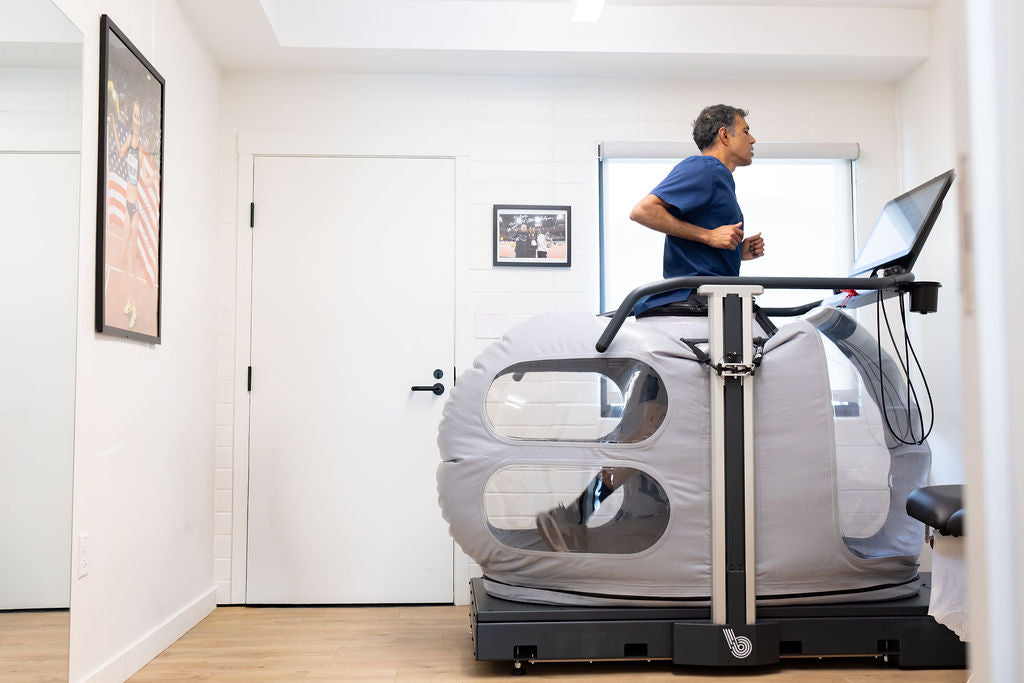
The Boost Treadmill reduces stress on joints and muscles, allowing users to stay active while managing injury-related limitations through controlled, low-impact movement.
1. Understand Your Limits Before Using Boost
Before beginning any activity, consult a doctor or physical therapist to understand your recovery boundaries, including weight-bearing restrictions and range of motion limits.
Boost supports this process by allowing users to work within those limits rather than exceed them. Adjustable bodyweight support helps reduce joint stress while preserving natural walking or running mechanics. This makes it possible to maintain movement without overloading the injury site. This applies across a wide range of lower-body and overuse injuries where maintaining controlled movement is appropriate.
The goal is consistency within safe parameters, adjusting based on how the body responds over time.
2. Low-Impact Cardio With Boost
The Boost Microgravity Treadmill allows walking or running with reduced body weight, helping reduce joint stress while maintaining cardiovascular activity and natural movement.
Sessions typically start short and controlled, focusing on comfort and tolerance. As recovery progresses, duration and intensity can be gradually increased.
Because bodyweight support adjusts in small increments, progression can happen in a controlled and measured way, helping users stay consistent throughout recovery.
3. Strength & Mobility While Injured
Recovery isn’t just about treadmill work—what happens between sessions matters too.
Strength and mobility exercises help maintain muscle activation and joint stability during recovery, typically through low-load, controlled movements focused on range of motion and movement quality rather than intensity.
Recovery habits like foam rolling, massage, hydration, nutrition, and sleep may also support overall recovery by helping reduce stiffness and maintain general tissue health.
When combined with Boost training, these elements create a more complete approach to staying active during recovery.
4. Example Weekly Movement Plan (Educational Only)
Disclaimer: This is an example only and not medical advice. Always consult a healthcare professional before starting any recovery program.
| Day | Activity | Duration | Notes |
|---|---|---|---|
| Mon | Boost walk | 15 min | ~60% bodyweight |
| Tue | Strength + mobility | 20–30 min | Bands + stretching |
| Wed | Boost walk | 15–20 min | ~65% bodyweight |
| Thu | Rest / yoga | 20 min | Mobility focus |
| Fri | Boost walk/jog | 20 min | ~70–75% bodyweight |
| Sat | Strength + recovery | 20–30 min | Foam rolling |
| Sun | Active rest | 20–30 min | Light movement |
As tolerance improves, settings and duration can be gradually adjusted.
Find more information on protocol guidance here.
5. Why Boost Helps During Recovery
Boost helps users stay active by reducing impact while preserving natural movement patterns. This allows continued movement and conditioning even when full weight-bearing isn’t appropriate.
Because support is adjustable, users can progress gradually instead of stopping and restarting activity, helping maintain continuity through recovery.
Bottom Line
Staying active during recovery is possible when movement is appropriately scaled. Boost enables controlled, low-impact activity that supports consistent movement and gradual progression.
Small, consistent sessions—combined with strength, mobility, and recovery habits—may help support a smoother return to full activity over time.
Learn more here.

Boost 2 vs Boost 3: Which Treadmill Is Right for You?