


When people are deciding whether to buy a Boost, the question underneath the question is almost always the same: are you the kind of company that will still be there after the sale? It's a fair thing to wonder, and it gets at something I'd rather say directly than leave people to figure it out on their own.
So here's what we actually believe, and how it shapes everything we do.
We're not trying to sell this company
This is the one I want to lead with, because I think it explains everything else.
Sean Whalen, Jimmy Bean, and I co-founded Boost in 2017. Sean had founded AlterG twelve years earlier and I was AlterG's first employee. We watched venture capital cycle through that company — nine CEOs in twelve years — until AlterG was acquired by an exoskeleton company now merging with a diabetes drug delivery business. That's not a knock on anyone's business decisions, it's just a long way from what the technology was built to do and from the patients and athletes it was built to serve.
We started Boost knowing exactly what that trajectory looks like, and with no interest in repeating it.
All I've really ever worked on is microgravity treadmills. Before this, I taught swimming for ten years — and teaching my daughter to swim these last couple of years has confirmed what I probably already knew: I'm not cut out for that anymore. I'm not looking for the next thing, and Sean isn't either. I want Boost to be stable, founder-led, and around for a long time; not because that's a reassuring thing to say, but because I genuinely don't know what else I'd do, and more importantly I don't want to do anything else.
The goal is to keep building something we're proud of, with cool and useful products that make a difference for people, with customers who think well of us, for as long as we can. That orientation toward longevity is the through-line in every decision that follows.
We believe the decision should be easy
A microgravity treadmill is a real capital commitment - tens of thousands of dollars, a machine that takes up space, a bet on technology that most of your patients have probably never encountered. Some people know immediately it's right for them. Others aren't sure, and being careful about it is exactly the right instinct.
So we offer a rental program designed around that reality. Rent it for a year, use it, and at the end of the year you can keep going or send it back. There’s no penalty for returning it because we'd genuinely rather have that than a customer who feels stuck.
There's also a clear purchase path built in. Within the first three months, you can convert to a purchase and every dollar you've paid in rent applies to the price. After that window, three months of payments still go toward a purchase if you decide to buy. Either way, the time you spend figuring it out doesn't cost you, financially or otherwise.
Home rentals start at $499/month and commercial facilities at $599/month, both on a one-year commitment. The rental program isn't a sales tactic. It's confidence made concrete.
We believe serviceability is a core design value, not an afterthought
This is the thing I wish more people asked about before buying any piece of equipment. And that goes for anyone's equipment, not just ours.
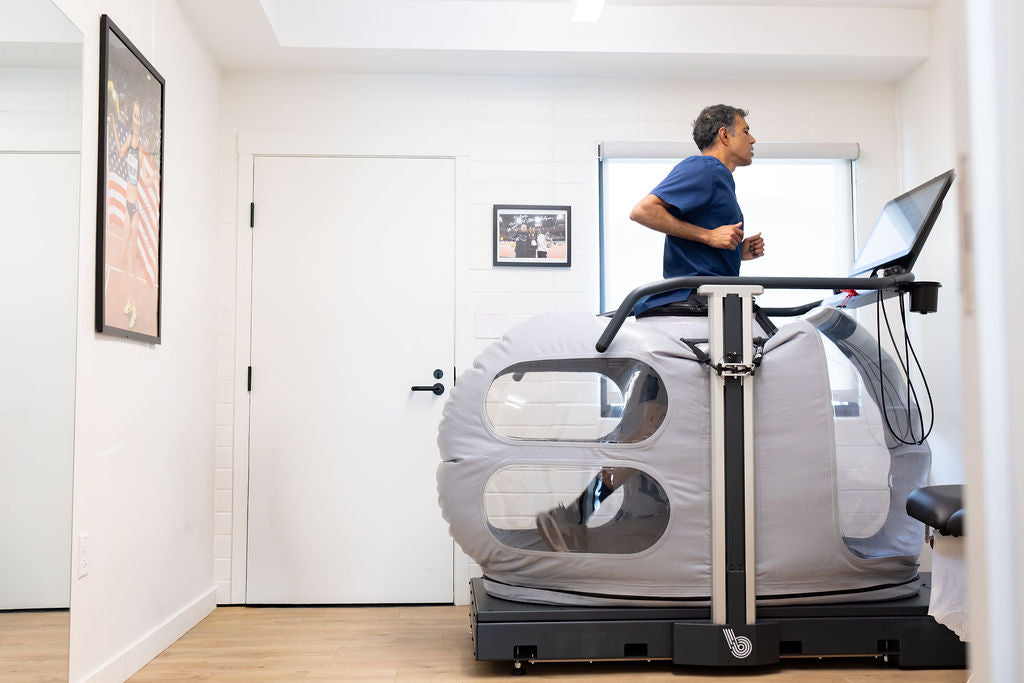
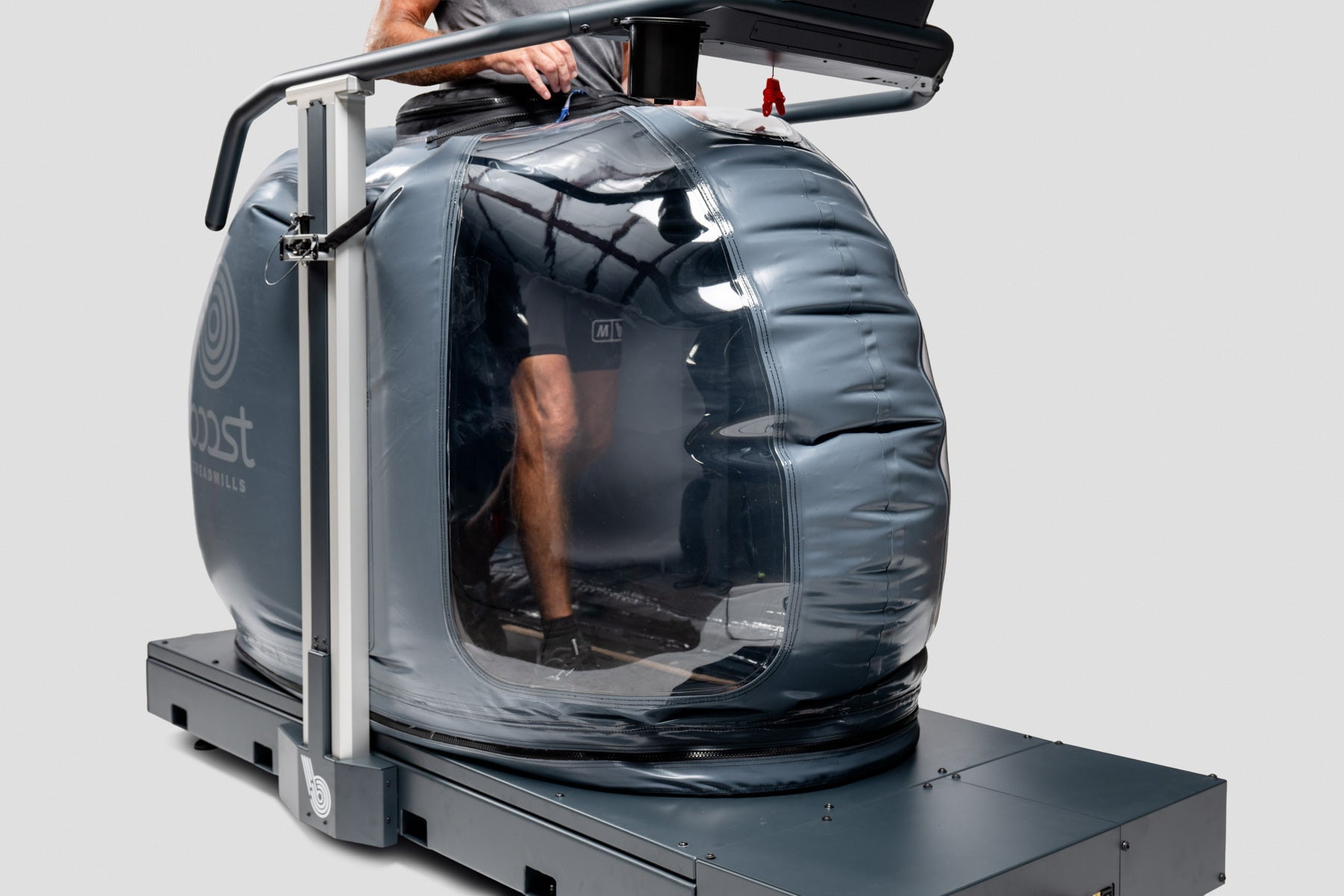
If you want to vacuum out the inside of a Boost Treadmill — and you should, periodically, because hair and debris accumulate in any chamber — you pop it open, vacuum it, and close it. Thirty seconds, no tools or technician needed.
The same task on an AlterG takes significantly longer and often requires a service visit. I know this firsthand. When I started at AlterG I was Sean's intern — which meant I was the test dummy for what happened if you fell at high speed, and the one who cleaned the machines, disassembled them, and put them back together. It was not fun. That's a design difference with real operational consequences: if cleaning requires a call, people defer it. Deferred maintenance becomes the problem you didn't need to have. To be honest, this was an issue with our Boost 1 models too. They were difficult to service and clean; but everything changed with the Boost 2.
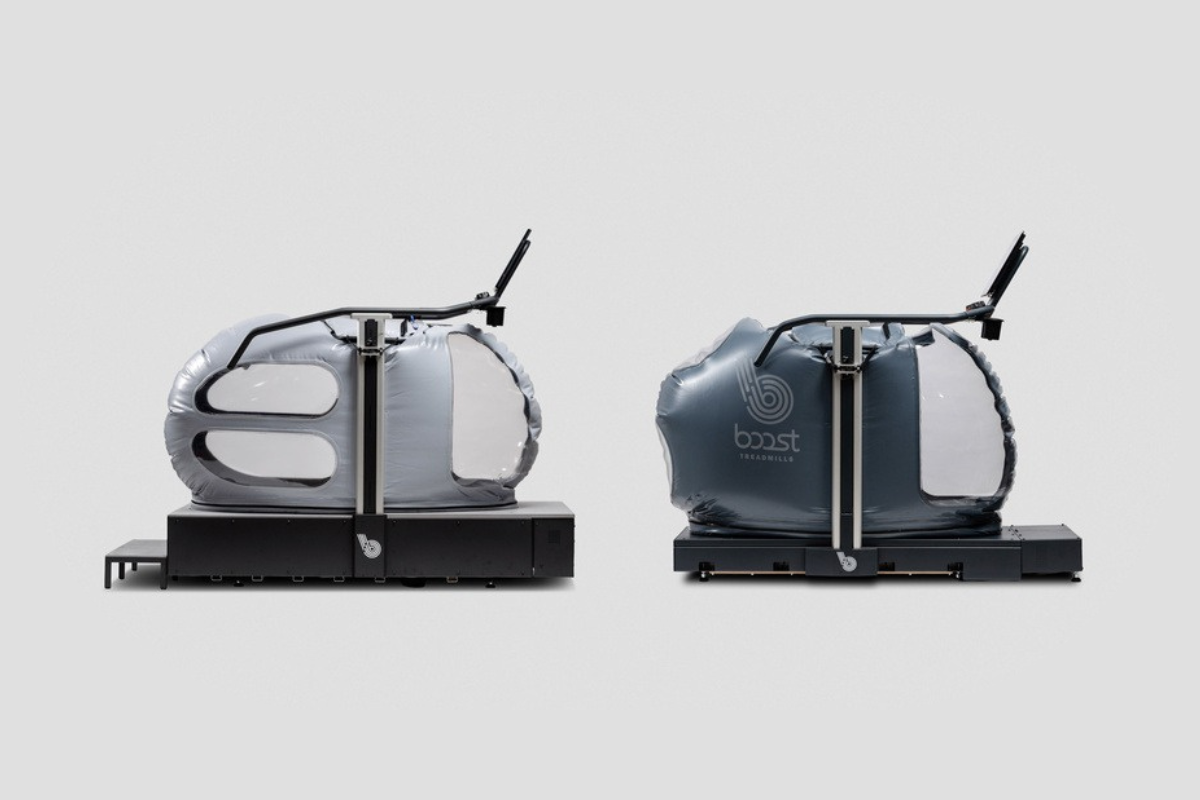
One reason we chose Woodway as the platform for our Boost 2 models is their service record. Woodway builds equipment that holds up under daily commercial use for years. In a business where a broken machine means cancelled patient appointments or an athlete missing training days, that reliability history matters as much as any performance specification. We weren't only buying the best running surface — we were buying a track record.
On the rare occasions when the airtight chamber bag on a Boost does need replacement, which is incredibly rare, it's a ten-minute job you can do yourself. It's a quick zip off/zip on and the part costs around $500. On an AlterG, the same repair typically requires a technician visit and runs $2,500 or more when you factor in parts, labor, and the service fee.
We designed our treadmills to be owner-serviceable because maintenance costs and downtime shouldn't be a revenue stream for the manufacturer. They should be as close to zero as we can make them. We go into more detail on how this plays out compared to AlterG here.
We believe you should be able to actually reach us
You made an investment in us. The last thing we want is to charge you to diagnose what's wrong with your own treadmill.
We pull data from the machine remotely before anyone gets in a vehicle. Our team can see what's happening, run diagnostics, and in many cases resolve the issue without a site visit at all. When we do need to come out, we know exactly what we're dealing with. No diagnostic fee, no wasted trip, and a much shorter window of disruption for your patients or athletes.
Beyond that: you can actually reach us. We aim to respond to all service issues within 24 hours, with multiple contact avenues available so we make sure to get you the help you need in a timely manner.
We are not trying to be a car company that makes more money on service than on the thing it sold you. We want you to own equipment that works, and we want you to think well of us because of that. That's the business model.
We believe the work isn't finished
We are constantly working on new things — new features, new form factors, new ways this technology can reach people it hasn't reached yet. AlterG actually called us out on their website a few years ago for developing a new machine. We took it as a compliment. The notion that the team who invented this category should stop innovating has never made any sense to us.
Most of the people building Boost came to it as users first. Coaches who used the machines with their athletes, athletes who rehabbed on them, people who showed up because they believed in it and never really left. So when you call Boost, you’re talking to someone who cared about this long before it was their job. That shows up in ways that don’t fit on a spec sheet.
We don’t know exactly what the future looks like, but we’ll still be here building, improving and working to make this technology more accessible to the people who need it most.
If you’re evaluating options, you can see a full, side-by-side comparison of Boost vs. AlterG here. Or if you're interested in learning more about Boost, feel free to reach out to our team or send me an email directly at tom@boosttreadmills.com and I'll respond with my number.
Boost vs. AlterG® — An Honest Comparison
Microgravity Treadmill Training: How It Helps Recovery