

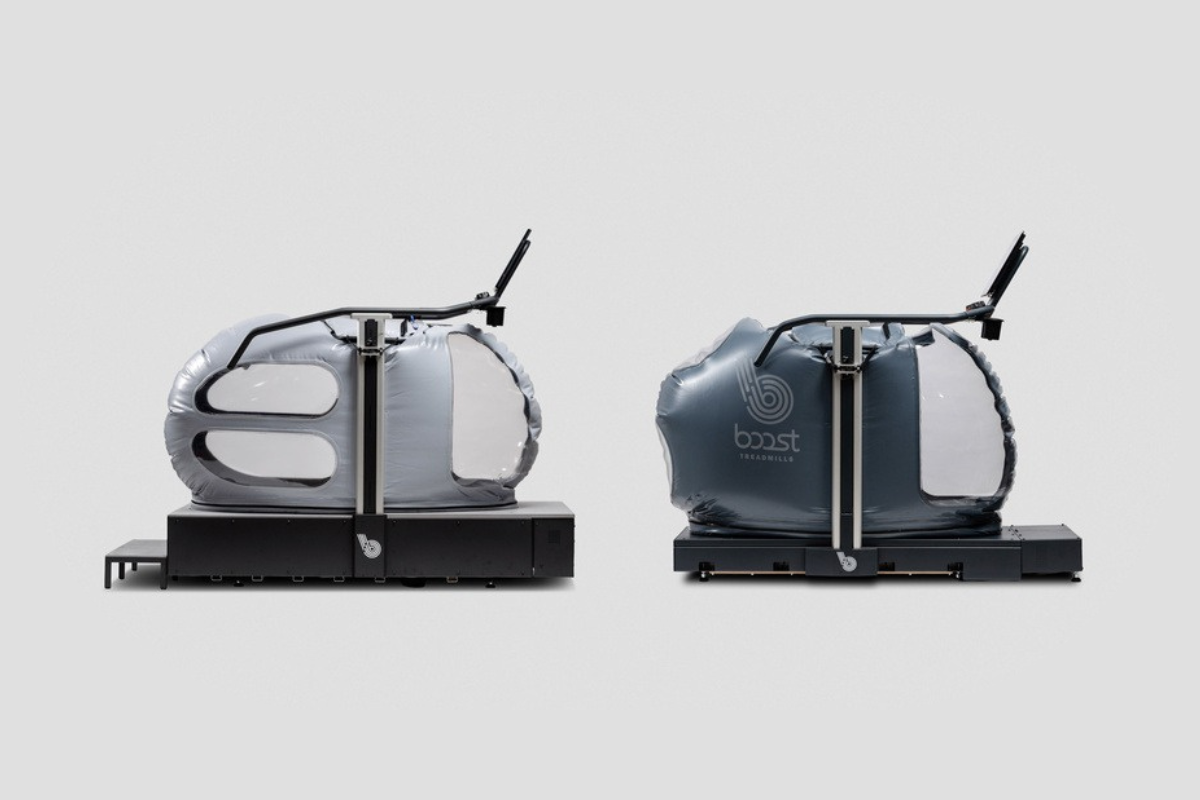
Overview — Choosing the Right Boost Treadmill
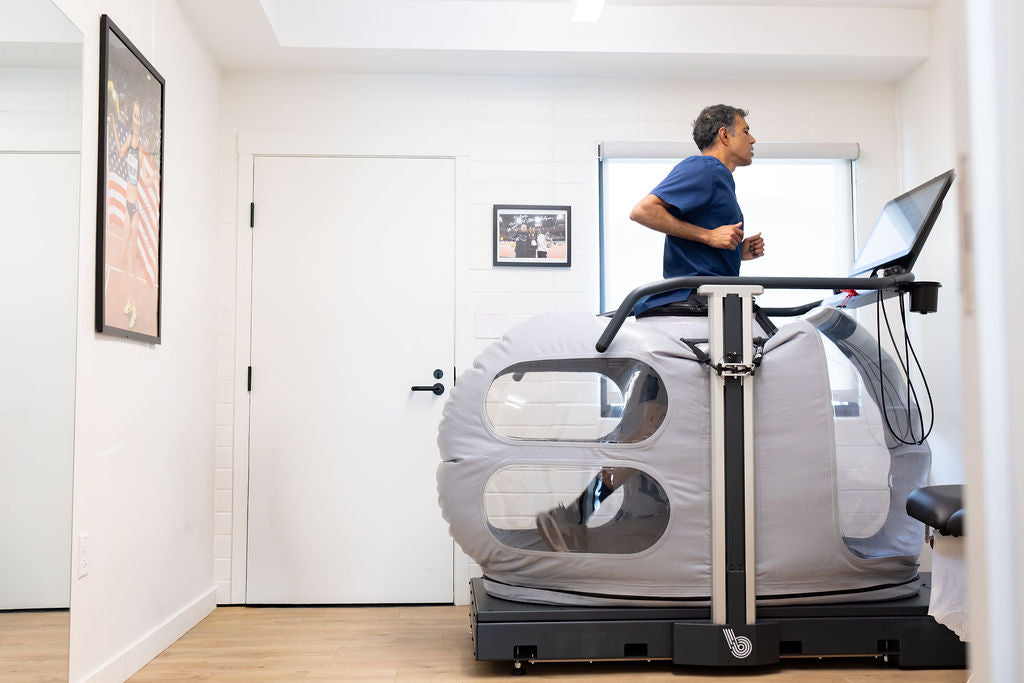
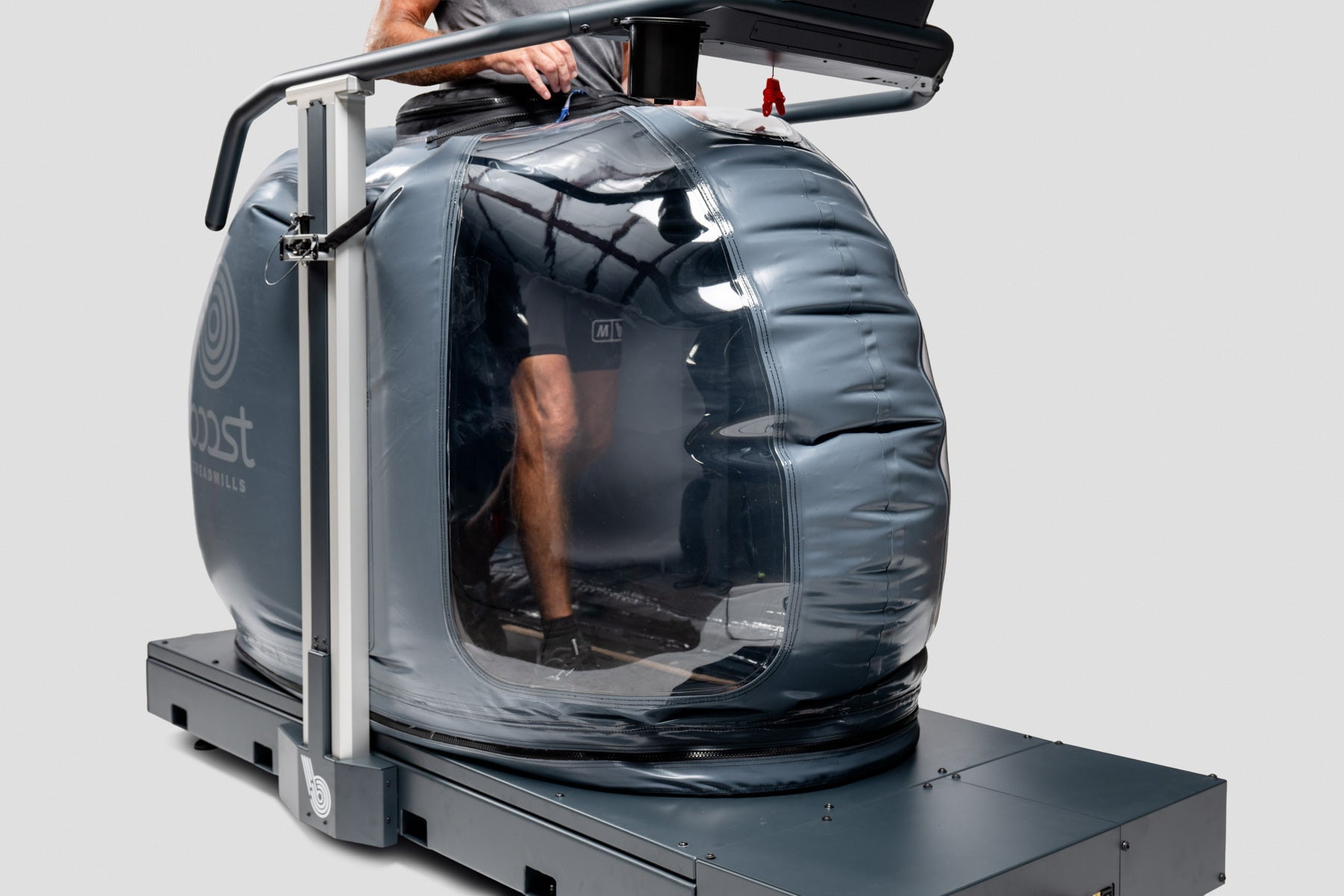
Boost Treadmills use NASA-inspired microgravity technology to reduce joint stress, support safe movement, and enable effective training and rehabilitation across a wide range of users.
Both Boost 2 and Boost 3 deliver the same core benefit—up to 80% bodyweight support, automatic height adjustment, intuitive controls for speed and bodyweight, and 360 gait visibility.
The key difference is intended use and environment.
The Key Difference
- Boost 2: A performance and medical-grade system built for high-use athletic environments, professional medical facilities, and performance centers
- Boost 3: A compact, accessible system designed for home use, clinics, schools, and recreational facilities
Who Should Use Boost 2?
Performance & Medical-Grade Use
Boost 2 is designed for environments that require durability, precision, and consistent high-volume use across both performance and medical applications.
Built on a Woodway 4Front slat belt base, Boost 2 is engineered for long-term durability under frequent daily use. It is also FDA-listed, supporting its use in hospital and medical facility settings.
Boost 2 is widely used by:
- High-performance athletes and sports teams
- Collegiate and professional training environments
- Hospitals and large medical facilities
- Performance centers and elite training facilities
It is commonly used for:
- Return-to-run and injury rehabilitation
- Load management and performance training
- Over-speed and gait development
- Medical rehabilitation and movement retraining
Boost 2 functions as both a performance training tool and a medical-grade rehabilitation system, making it ideal for high-demand environments where precision, repeatability, and durability are essential.
Who Should Use Boost 3?
Home, School & Small Clinical Use
Boost 3 is designed for accessibility, simplicity, and everyday usability in smaller-scale environments.
Its compact footprint and user-friendly interface make it ideal for home users, schools, and clinical settings where the focus is safe movement, recovery, and general conditioning.
Boost 3 is commonly used for:
- Home-based recovery and rehabilitation
- Physical therapy clinics and other outpatient clinical settings
- School athletic programs
- Recreational fitness and low-impact training
It provides an effective way to stay active, support recovery, and maintain movement without requiring a large-scale performance or hospital-grade setup.
Choosing Based on Your Goals
The choice between Boost 2 and Boost 3 comes down to environment, intensity of use, and training demands—not core technology.
Boost 2 is best suited for organizations that require a durable, high-precision system for performance training and hospital-level rehabilitation.
Boost 3 is ideal for individuals and smaller environments prioritizing accessibility, ease of use, and consistent low-impact movement.
Both systems deliver the same foundational microgravity technology, reducing impact while preserving natural movement and supporting safe progression over time.
Conclusion
Boost 2 and Boost 3 are built for different environments, but they share the same purpose: helping people move better, train consistently, and reduce impact.
Whether in a hospital, performance center, clinic, school, or home, the right choice depends on how the system will be used—not the underlying technology.
Learn more about Boost 2 and Boost 3 here.

How Boost Help Athletes Train Consistently: From High School to Pro
How to Stay Active While Recovering From Injury Using Boost