

Marathon training is often associated with long miles on open roads, early morning runs, and weeks of building endurance. But recently, more attention has turned to another training option: the treadmill.
Elite runner Vinny Mauri helped spark that conversation ahead of the 2026 Chicago Marathon. Following a 2:05:53 marathon debut, Mauri experimented with an unconventional training block that included seven consecutive weeks of long runs exceeding 26 miles, a peak week of 138 miles, and a 45-mile day on a Planet Fitness treadmill.
His approach generated plenty of discussion throughout the running community about how athletes can use treadmills as part of their preparation. While his training was highly individual, it highlights a broader point: runners and coaches are continually exploring different ways to build endurance, manage training demands, and prepare for race day.
Conventional treadmills offer control over pace, speed, and incline. But what if runners could also adjust how much of their bodyweight they support?
That's where reduced-bodyweight treadmill technology comes in.
Why Runners Are Turning to Treadmill Training
Whether preparing for a first marathon or pursuing a personal best, consistency is a major part of endurance training. Treadmills offer a controlled environment that can help runners maintain their routines, complete structured workouts, and adapt to changing schedules.
Controlled pacing: Maintaining a consistent pace outdoors can be challenging. Terrain, weather, and GPS accuracy can affect how a run feels and how pace is measured. On a treadmill, runners can set a target speed and make precise adjustments throughout a session.
A consistent training environment: Rain, extreme temperatures, and limited daylight can complicate a training schedule. Indoor running provides another option when outdoor conditions aren't ideal.
Speed and incline control: Treadmills allow runners to adjust speed and incline to suit different workout goals, from steady aerobic runs to intervals and hill sessions.
More flexibility: For runners balancing training with work, family, and other commitments, having access to a treadmill can make it easier to fit runs into the day, including shorter sessions or additional runs on double-run days.
Treadmill training isn't a replacement for every aspect of outdoor running. Road and trail sessions remain important for preparing for race-specific terrain, surfaces, and conditions. But treadmills can provide another useful option within a broader training plan.
Balancing Mileage, Intensity, and Recovery
Marathon preparation requires more than accumulating miles. Runners must balance training volume, workout intensity, and recovery while managing the physical demands of their overall schedule.
As mileage increases, managing the demands placed on the body becomes an important consideration. Adding more running can help athletes work toward their endurance goals, but it also increases overall training load.
This is one reason treadmill training is worth exploring beyond convenience alone. The ability to control pace and structure sessions in a consistent environment gives runners and coaches another way to approach their training.
For some athletes, the next question is how to incorporate additional running while adjusting the demands of individual sessions. Reduced-bodyweight treadmill technology offers another option to consider.
Beyond the Traditional Treadmill: Introducing Reduced-Bodyweight Running
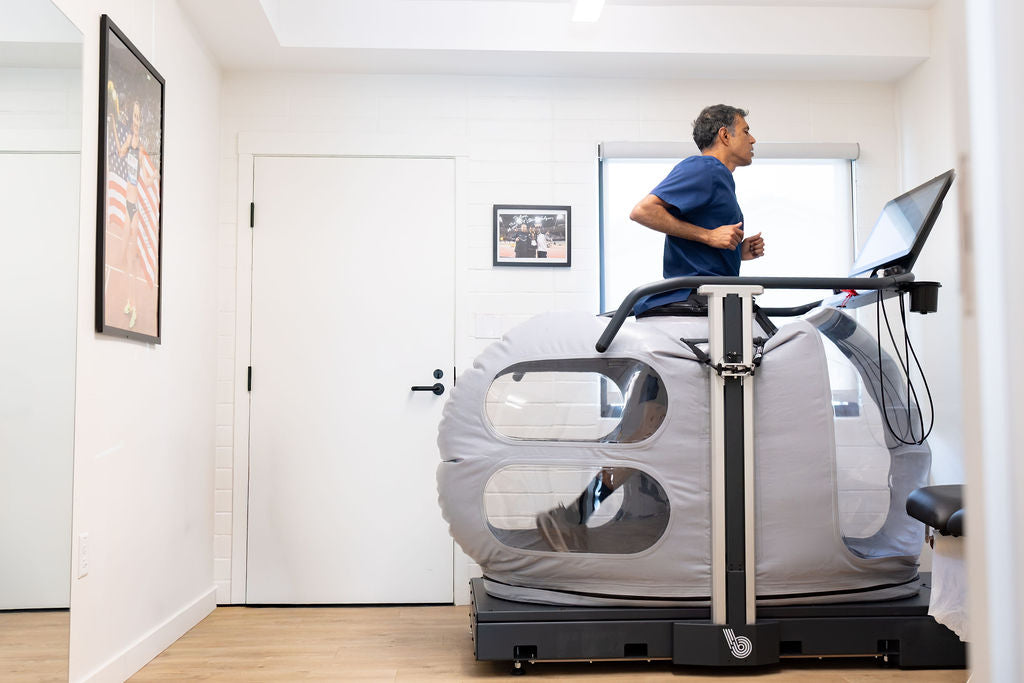
Traditional treadmills allow runners to control speed and incline. Boost Treadmills add another variable: adjustable bodyweight support.
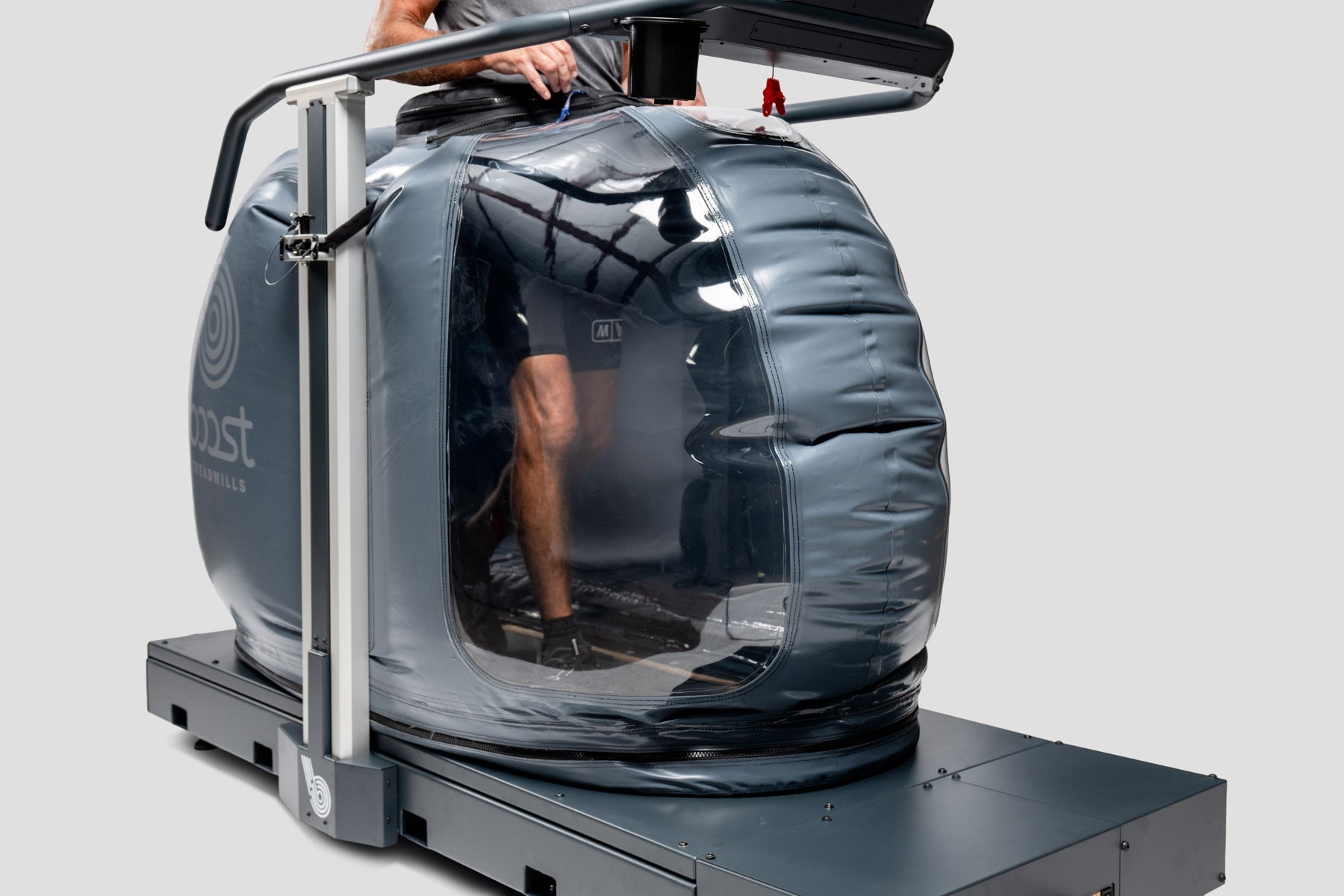
Using differential air pressure technology, Boost allows users to reduce their effective bodyweight by up to 80%, in 1% increments, while walking or running. This creates an adjustable running environment in which athletes can work at different levels of bodyweight support according to their training goals and individual needs.
Unlike a conventional treadmill, Boost allows runners to modify the amount of weight they support while continuing to run at a controlled speed. That combination creates additional possibilities for structured training, including sessions focused on mileage, recovery, and faster leg turnover.
So, how might that fit into a marathon runner's routine?
How Boost Can Fit Into Marathon Training
1. Incorporating Additional Running Volume
Building endurance often involves accumulating consistent mileage across multiple sessions each week. Some runners incorporate double-run days or shorter additional runs to distribute their training volume.
With Boost, runners can adjust bodyweight support during these sessions, potentially allowing them to incorporate additional running with less weight-bearing demand than running at full bodyweight.
For example, an athlete might use supported running for a shorter second session or an easy aerobic workout, depending on their training plan. The objective is to give runners and coaches another option when deciding how to distribute mileage throughout the week.
More mileage isn't automatically better, and reducing bodyweight support doesn't eliminate the demands of running. Training volume should still be progressed appropriately based on the athlete's experience, goals, and recovery.
2. Exploring Speed and Faster Leg Turnover
Speed development is another part of a well-rounded running program. By reducing effective bodyweight, some runners may be able to reach treadmill speeds beyond what they can comfortably achieve at full bodyweight. This creates an opportunity to explore faster leg turnover in a controlled environment.
Boost can be used for structured speed sessions and overspeed training, where appropriate, allowing athletes to experiment with faster belt speeds while receiving bodyweight support. These sessions require appropriate progression and attention to running mechanics, and faster supported running should not be assumed to translate directly to faster race times.
Boost also offers pre-programmed workouts that provide options for structuring sessions around different training goals. Combined with adjustable speed, incline, and bodyweight support, these features give runners and coaches additional flexibility when planning workouts.
3. Adding Flexibility to Recovery Days
Recovery is an important part of any marathon training plan. Not every session needs to involve high mileage or intense effort, and runners may need to adjust their training based on fatigue, soreness, and how they're responding to their workload.
For selected sessions, Boost offers an option for supported running at a reduced bodyweight. Depending on the athlete and their plan, this may allow them to maintain running-specific movement while modifying weight-bearing demands.
Some runners may also consider supported running as part of a double-run day, when the goal is to distribute training across sessions rather than make every run equally demanding.
Boost doesn't remove the need for rest or guarantee faster recovery. Instead, it provides another option that runners and coaches can consider when planning training and recovery.
4. Bringing Supported Running Into Your Home
For runners who want to make supported running part of their regular routine, access matters. The Boost 3 makes microgravity treadmill technology an option for home use, with a compact footprint designed to fit more easily into a variety of spaces.
With purchase, financing, and rental options available, runners can explore ways to incorporate supported running into their training without relying solely on access to a sports performance facility. Rental options start at $599 per month, offering an alternative to purchasing the treadmill outright.
Whether adding a supported session to a weekly routine, incorporating an additional run, or exploring different training options, the Boost 3 brings another approach to treadmill training closer to home.
Interested in training with Boost at home? Explore the Boost 3 to learn more about its features and available options.
How Elite Runners Are Incorporating Boost Into Their Training
The growing conversation around treadmill training raises another question: how can reduced-bodyweight running fit into an actual marathon training routine?
Professional runner Jacob Thomson has shared how he incorporates Boost into his marathon training, offering a real-world example of how bodyweight support can be used alongside traditional running.
“When I'm in really heavy marathon training, I like to do a couple runs a week on the Boost. I can still get the mileage in, but I can take a little bit of the impact off my legs. The Boost is a great tool to be able to get in more work and save the legs, but still really develop that aerobic system.”
— Jacob Thomson, Under Armour professional distance runner
Jacob's experience offers a practical perspective on how Boost can fit into an athlete's broader approach to training. Every runner's routine is different, but his story helps illustrate how adjustable bodyweight support can provide another option when planning and adapting running sessions.
Want to learn more? Hear directly from Jacob Thomson as he shares how he incorporates Boost into his marathon training, manages high mileage, and reduces impact on his legs.
Finding the Right Boost for Your Running Goals
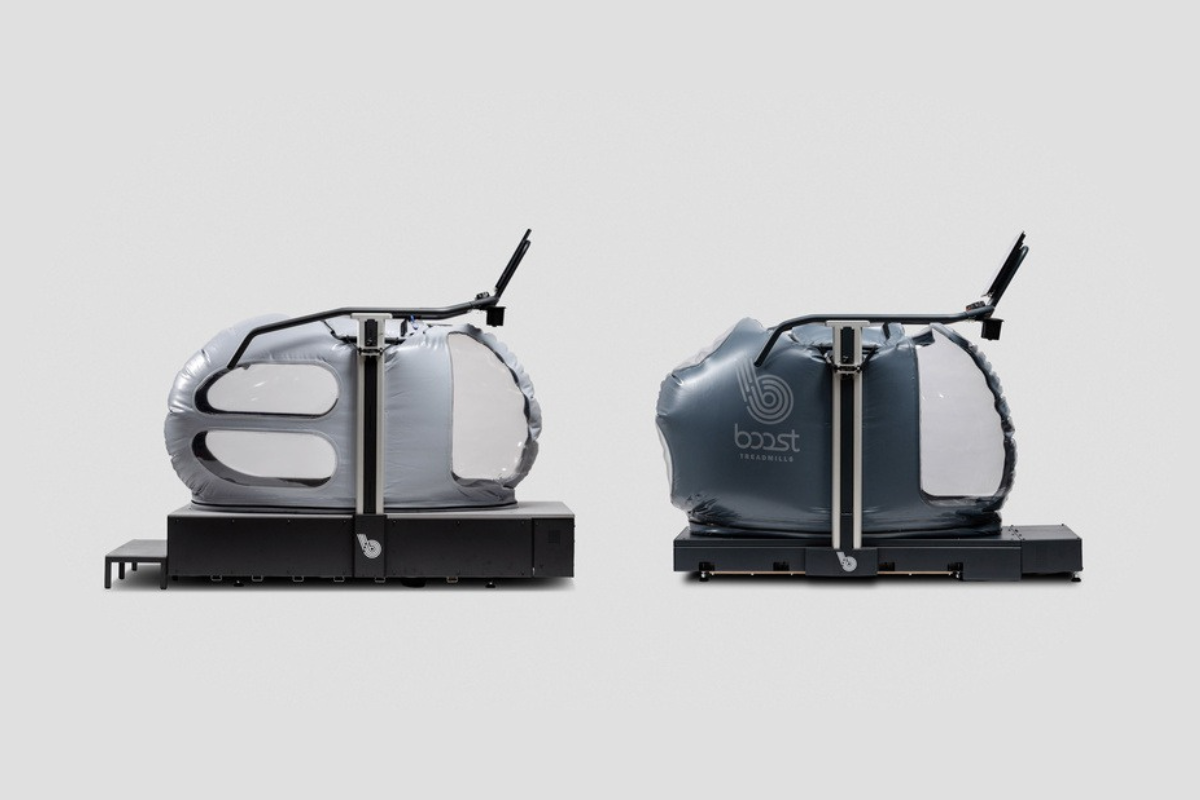
Every runner has different training goals, space requirements, and equipment preferences. Boost offers options for both home users and performance-focused facilities.
|
Boost 3: Supported running at home
With a more compact footprint and purchase, financing, and rental options, the Boost 3 offers a way for runners to explore microgravity treadmill training in a home setting. It's an option for those looking to incorporate supported running into their routine without needing a dedicated commercial training facility. |
|

|
Boost 2: A premium performance setup For elite athletes, sports teams, and performance facilities looking for the Woodway 4Front slat-belt treadmill platform, the Boost 2 combines that premium base with adjustable bodyweight support. Both models offer Boost's microgravity technology, allowing users to adjust effective bodyweight during walking and running. The right fit depends on your training goals, available space, and preferred treadmill platform. |
|

Explore the Boost 3 for home use or learn more about the Boost 2 for performance-focused training.
Beyond the Road
The growing conversation around treadmill training is a reminder that marathon preparation doesn't look the same for every runner. Athletes continue to explore different approaches to building endurance, structuring workouts, and managing the demands of training.
Conventional treadmills offer control over pace and incline. Reduced-bodyweight treadmill technology adds the ability to adjust bodyweight support, creating another option for selected training sessions.
From incorporating additional mileage to exploring faster leg turnover, Boost gives runners and coaches another tool to consider as part of an individualized training plan.
Interested in exploring reduced-bodyweight running? Visit our Boost for Runners page to learn more about how microgravity treadmill technology can fit into athletic training and support a range of running goals.
How to Stay Active While Recovering From Injury Using Boost