

Overview
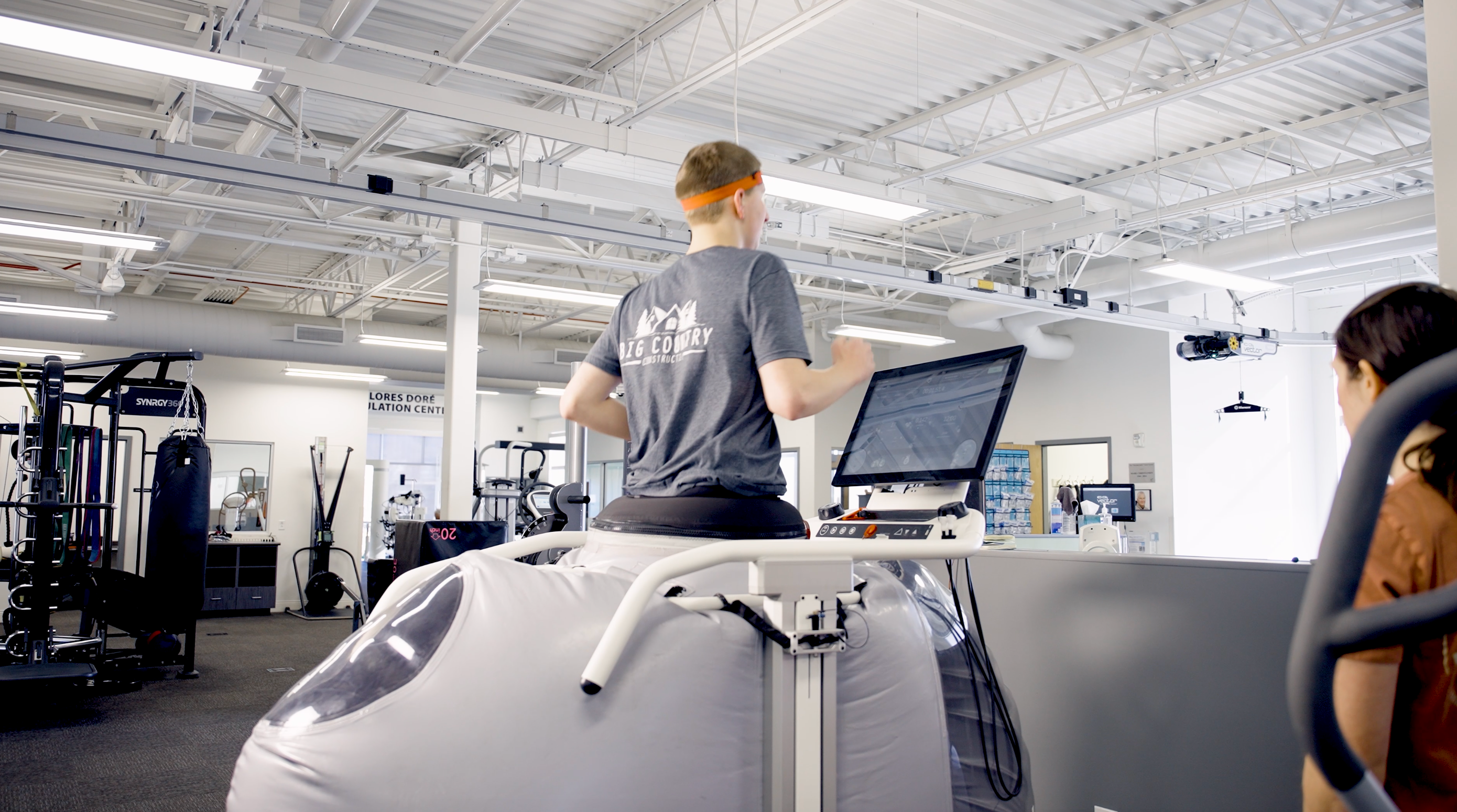
Boston Langston grew up rodeoing and competing year-round as an athlete. After a devastating rodeo accident during his sophomore year of high school resulted in a traumatic brain injury, Boston faced an uncertain road to recovery. Through intensive rehabilitation and training with the Boost Microgravity Treadmill at Neuroworx, he began regaining strength, speed, and confidence in ways that once seemed impossible.
Challenge
During a high school rodeo competition in Delta, Utah, Boston was involved in a catastrophic accident after his horse collided with a steer and rolled over him, dragging him approximately 70 feet. He suffered a traumatic brain injury and remained unconscious for 35 days.
Doctors warned Boston’s family that he would likely struggle to walk or talk independently after leaving the hospital. For Boston and his family, recovery became a daily commitment focused on rebuilding the abilities and independence he once had.
“They had told us that he would likely not be talking or walking when he was released from the hospital… and we just weren’t interested in hearing that.” — Brooke Langston (Boston’s Mom)
Solution
As part of his rehabilitation at Neuroworx, Boston worked extensively with therapists using gait training, harness systems, and eventually the Boost Treadmill. Therapists incorporated running, incline work, side stepping, and backwards walking to help retrain movement patterns and rebuild strength.
When Boston first stepped into the Boost, therapists reduced his body weight support to allow him to move more freely and safely while minimizing impact and instability.
“We put him at 40%, started cranking up his speed, and he just kept saying, ‘Let’s go faster.’” — Marissa Moran, PT, DPT
Implementation
The Boost became an important part of Boston’s recovery routine because it allowed him to safely practice movements that would have otherwise been difficult or exhausting outside the treadmill. By reducing impact and body weight load, Boston could focus on speed, coordination, and power development while gaining confidence in his movement again.
Therapists used the Boost not only for physical rehabilitation, but also to help Boston reconnect with activities that once defined him as an athlete.
“This is a place where he feels normal… like he can move better. It’s definitely helped his mental health as well.” — Marissa Moran, PT, DPT
Results
Boston’s recovery progressed rapidly. His therapists noticed improvements in speed, power, and movement quality—particularly in his left leg. Beyond the physical gains, the ability to run again became a major emotional milestone for both Boston and his family.
Only months after an injury that left his future uncertain, Boston was able to run a mile on the Boost treadmill in under 10 minutes.
“It’s given me a boost of confidence for sure and just allowing me to do things that I used to be able to do.” — Boston Langston
Looking Ahead
For Boston and his family, recovery continues to be a journey, but the Boost has provided moments that once felt out of reach. The ability to safely run again restored not only movement, but also motivation, independence, and hope for what’s ahead.
“It’s just a gift to watch him finally feel what that feels like to run again.” — Brooke Langston (Boston's Mom)

Simon Thorpe: Dixon High School Cross Country
Peyton Neville, Cabot High School: Returning to Soccer After ACL Injury