

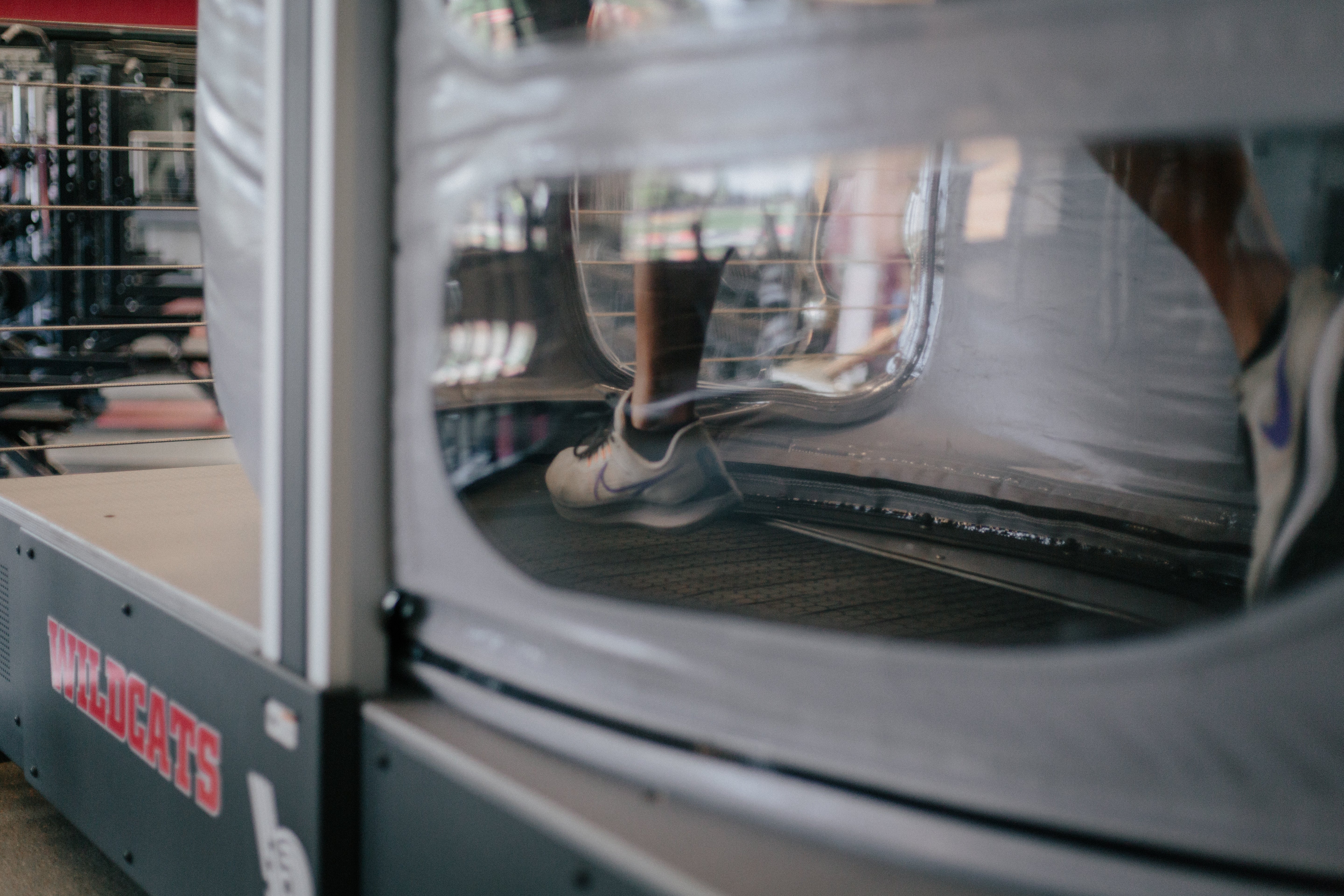
Overspeed training is an advanced form of training that involves performing exercises or movements at a speed that is faster than what an athlete would typically perform in a competition or training session. The idea behind overspeed training is that by increasing the speed of movement, the neuromuscular system is stimulated to adapt and become more efficient, leading to improved performance.
What are the benefits of overspeed training?
Improved Neuromuscular Efficiency
Overspeed training is extremely effective in improving neuromuscular efficiency. By performing exercises or movements at a faster speed than usual, the body is forced to adapt to that new speed. This adaptation process involves the recruitment of more muscle fibers, which in turn helps to improve overall speed and power. This increase in neuromuscular efficiency can then translate to overall better performance.
Improved Coordination
Overspeed training can also improve coordination. At higher speeds, the body is forced to coordinate its movements more quickly and efficiently. This improved coordination can translate to improved performance in sports that require fast and precise movements, such as basketball, football, and soccer.
Reduced Risk of Injury
Another benefit of overspeed training is that it can help to reduce the risk of injury. Because the body is forced to recruit more muscle fibers, it helps to strengthen those muscles and in turn reduce the risk of injury. Additionally, it can help to improve overall mobility and flexibility, which also contributes to decreased injury risk.
Why use the Boost Technology for overspeed training sessions?
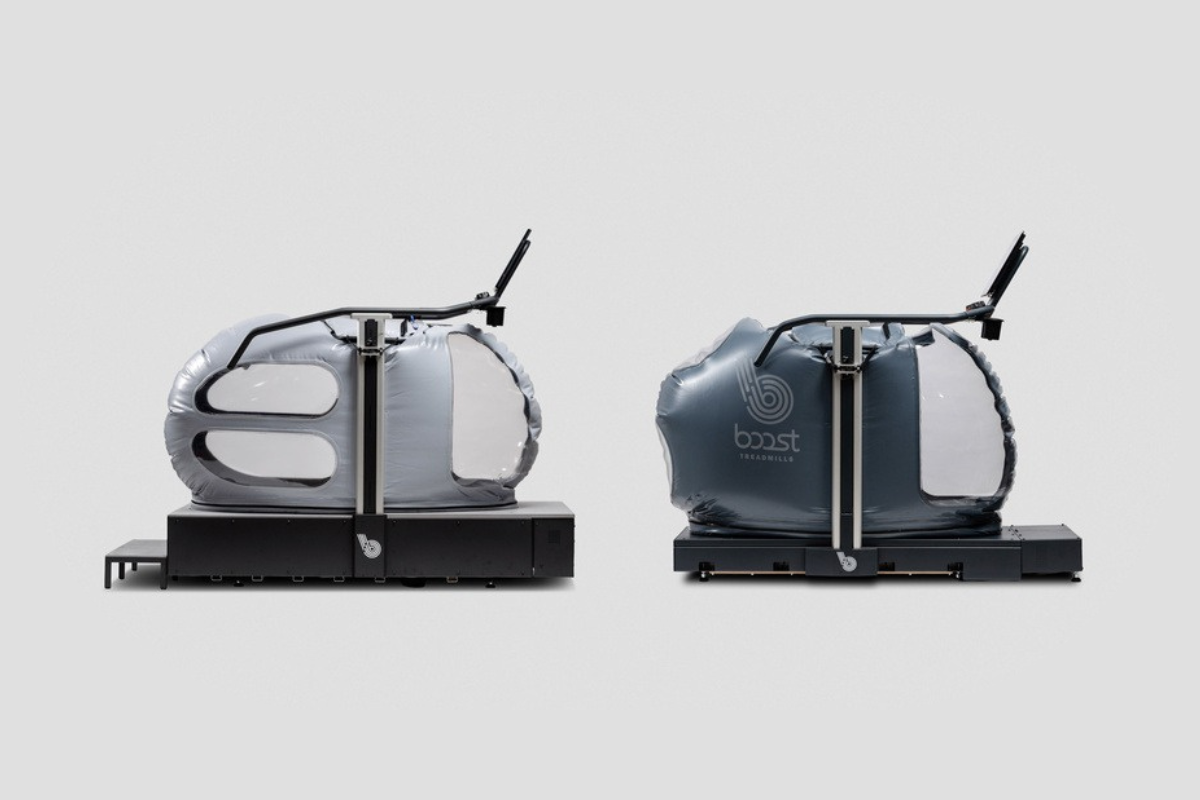
Typical methods of traditional overspeed training include downhill sprints, treadmill running, or even towing with bungee cords. Not only do these methods limit the amount of time an athlete can spend at higher speeds, but can be potentially dangerous as well in terms of injury risk due to the extended range of motion and increased engagement of typically dormant muscle tissues. This is where the Boost microgravity technology comes in and can play a crucial role in the safety and effectiveness of overspeed training, ultimately helping take your performance to the next level.
Balance & Fall Prevention
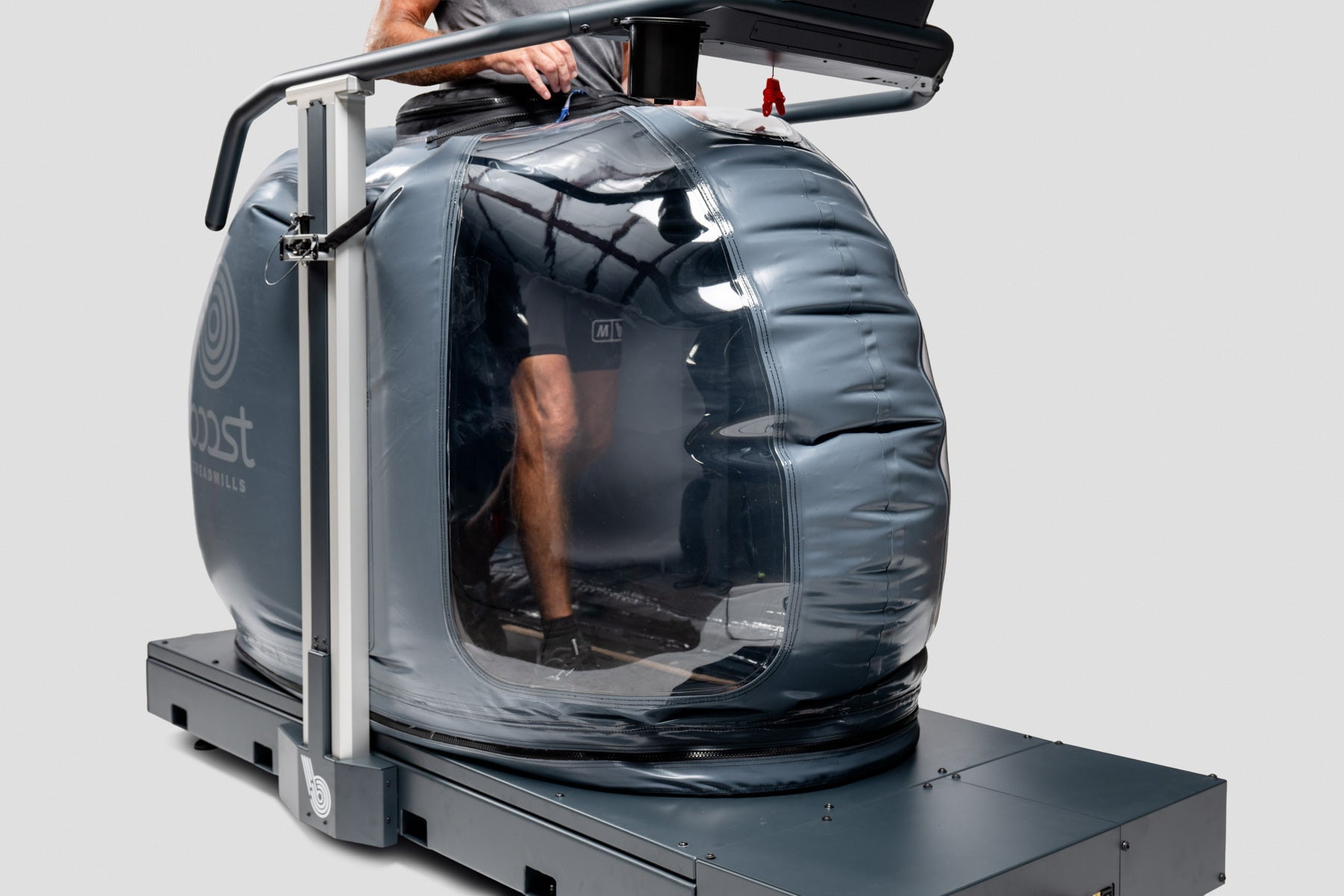
Balance support is extremely important in overspeed training so that the athlete can focus on faster speeds without worrying about falling and injuring themselves. Because the user is zipped into a structured and sturdy support system, balance is fully supported so that the athlete can train at faster speeds without running the risk of falling or tripping and causing serious injury.
Supports Proper Running Mechanics
Not only does the structured support system provide balance, but it also allows for an extended range of motion while providing support for proper running mechanics. The Boost 2 Treadmill was designed with high-speed running in mind. Unlike other microgravity treadmills, users on the Boost 2 will experience much greater freedom of movement in their upper bodies.
Decreases Impact on Bones & Joints
Injury risk is significantly reduced when performing overspeed training in the Boost when compared to other methods of overspeed training, such as downhill sprinting, due to the decreased impact on bones and joints.
Reach Even Faster Speeds
Without the risk of falling or compromising form, the reduced body weight also allows athletes to reach even faster speeds than what they would be capable of when performing overspeed training on the ground. Plus, overspeed training isn’t always about top-end speed; it can also be speed over time. For example, although the Boost speed capability maxes out at 50-second 400 meter pace, a 45-second 400 meter athlete could run that 50-second pace for a longer period of time - say 600 meters - which helps improve speed endurance. This in turn gives the athlete the potential to open up new training windows and explore speed/power capabilities that may not have been possible before.
Boost Confidence
Athletes can gain confidence with overspeed training on the Boost through conquering faster or longer workouts than they could accomplish on the ground. You often hear people say that running is 90% mental, and the rest is physical. When you truly believe in your ability it can take you a long way, and the Boost can help athletes to realize their potential as the confidence that comes from microgravity training translates to overground running and ultimately racing.
Overspeed training can be an extremely valuable tool for athletes looking to improve their speed, power and overall performance, and can be the most effective when performed on the Boost Microgravity Treadmill™. Of course, as with any training program, it's important to work with a qualified coach or trainer to ensure that overspeed training is incorporated safely and effectively into an athlete's training program.


At the 4Front: Woodway® x Boost Treadmills
Running on Air: The Role of Microgravity in Cross Country, Track & Field